

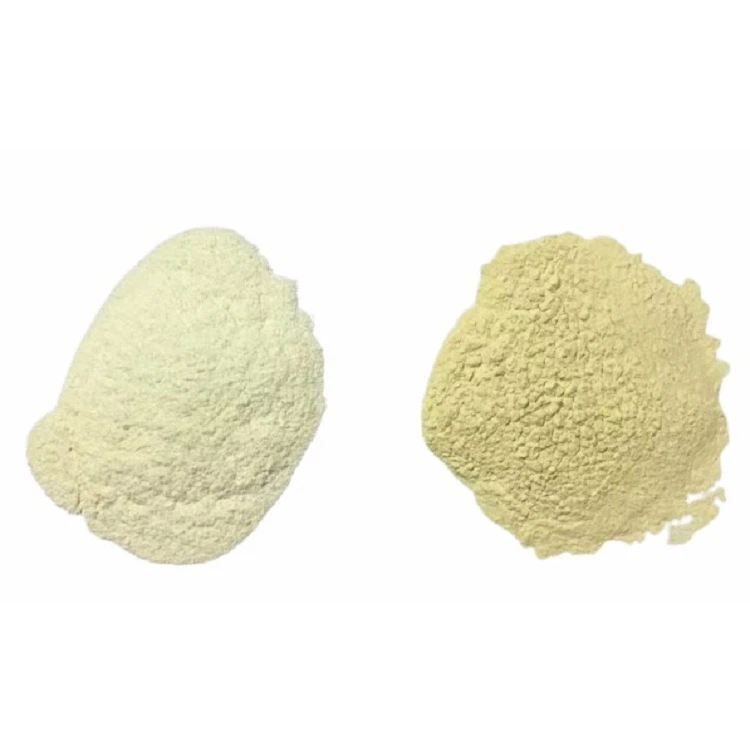
Ingredient: 10-30%
Light yellow powder, 100% soluble
Dosage: 1:5000 and spray 3-5 times at the whole growth stage.
If added in other formulation: do as 0.1-0.3% solution
Key Benefits of Polyglutamic Acid (γ-PGA)
Polyglutamic Acid stands out for its exceptional functional properties, which make it superior to many traditional ingredients and suitable for diverse industrial needs. Its core benefits are backed by scientific research and practical applications:
Superior Moisturizing Ability: γ-PGA has 2-3 times stronger water-absorbing and water-retention capacity compared to hyaluronic acid (HA), the gold standard in moisturizing ingredients. It can form a breathable, moisture-locking film on the skin surface, reduce transepidermal water loss (TEWL), and keep the skin hydrated, soft, and elastic for a long time. This makes it ideal for addressing dryness, dullness, and rough skin.
Biodegradable & Non-Toxic: As a natural biopolymer, γ-PGA is fully biodegradable, breaking down into non-harmful glutamic acid (an essential amino acid for the human body) that poses no risk to the environment or human health. It is non-irritating, non-allergenic, and compatible with human skin and various biological systems, making it safe for long-term use in cosmetics, food, and pharmaceuticals.
Metal Chelation & Detoxification: γ-PGA contains a large number of carboxyl groups, enabling it to effectively chelate heavy metal ions (such as Pb²⁺, Cu²⁺, Cd²⁺, and Cr³⁺) in soil and water, reducing heavy metal pollution and protecting ecological systems. In the human body, it can help inhibit the absorption of harmful heavy metals, supporting internal detoxification.
Nutrient Enhancement & Absorption Promotion: In agriculture, γ-PGA can improve the solubility and availability of nutrients (such as phosphorus, calcium, magnesium, and trace elements) in soil, preventing nutrient precipitation and promoting their absorption by crop roots. In food and pharmaceuticals, it enhances the absorption of minerals (e.g., calcium) and bioactive substances, boosting their efficacy.
Thickening & Stabilizing Properties: γ-PGA has excellent viscosity and film-forming ability, serving as an effective thickener, stabilizer, and emulsifier in food, cosmetics, and industrial products
Applications of Polyglutamic Acid (γ-PGA)
Due to its unique functional properties, γ-PGA has been widely applied in multiple industries, with continuous expansion of its application scenarios driven by technological innovation. Below are its core application fields with practical cases and market value:
1. Cosmetics Industry
As a high-performance moisturizing and skin-care ingredient, γ-PGA is widely used in skin care products such as lotions, creams, serums, masks, and toners. Its superior water-retention capacity and skin-friendly nature make it suitable for all skin types, especially dry and sensitive skin. It not only provides long-lasting hydration but also helps improve skin barrier function, reduce fine lines caused by dryness, and enhance skin elasticity. Many high-end cosmetic brands have incorporated γ-PGA into their products as a core moisturizing component, replacing or complementing hyaluronic acid to achieve better skin care effects.
2. Agriculture Industry
In agriculture, γ-PGA is used as a green and efficient agricultural additive, including plant growth regulators, soil conditioners, and fertilizer synergists. It can chelate nutrients in the soil, improve nutrient utilization rate by 20%-30%, promote root development of crops, enhance crop resistance to drought, lodging, and diseases, and ultimately increase crop yield and quality. It is widely applicable to grain crops (rice, wheat, corn), cash crops (cotton, tobacco), and fruits and vegetables (tomatoes, cucumbers, apples), and is favored by ecological agriculture and organic farming practitioners for its environmental friendliness.
3. Food Industry
γ-PGA is approved as a food additive (food grade) in many countries and regions. It serves as a thickener, stabilizer, emulsifier, and water-retaining agent in food production, widely used in products such as yogurt, beverages, noodles, meat products, and pastries. For example, adding γ-PGA to noodles can improve their toughness and chewiness, prevent them from sticking together; adding it to meat products can retain moisture, reduce water loss during processing, and keep the meat tender and juicy. In addition, γ-PGA can also be used as a dietary supplement to promote calcium absorption, suitable for functional foods targeting the elderly and children.
4. Pharmaceutical Industry
In the pharmaceutical field, γ-PGA is used as a biodegradable pharmaceutical excipient and drug carrier due to its non-toxicity and biocompatibility. It can be made into microspheres, hydrogels, and films to control the release of drugs, improve drug bioavailability, and reduce side effects. For example, γ-PGA-based drug carriers can target the delivery of anti-cancer drugs to tumor tissues, enhancing the therapeutic effect while reducing damage to normal cells. It is also used in wound dressings, as its film-forming and moisture-retention properties can promote wound healing and prevent infection.
5. Environmental Protection Industry
Leveraging its metal chelation ability, γ-PGA is used in environmental remediation, especially in the treatment of heavy metal-contaminated soil and water. It can chelate heavy metal ions in the environment to form stable complexes, which are easy to separate and remove, reducing heavy metal pollution. In addition, γ-PGA can be used as a biodegradable flocculant in water treatment, replacing traditional chemical flocculants to avoid secondary pollution, and is suitable for the treatment of industrial wastewater and domestic sewage.
6. Other Industrial Applications
γ-PGA also has broad application prospects in other fields: in the textile industry, it is used as a fabric finishing agent to improve fabric softness, moisture absorption, and wrinkle resistance; in the daily chemical industry, it is added to detergents and shampoos to enhance product viscosity and stability; in the material field, it is used to prepare biodegradable plastics, reducing white pollution.
Hot Tags: polyglutamic acid pga, China polyglutamic acid pga manufacturers, suppliers, factory, ethephon 2, naa hormone use, cytokinin for sale, cycocel plant growth regulator, naphthalene acetic acid in plants, sugarcane plant growth regulators