

EDDHA-Fe chelated iron stays fully active across soil pH 4.0–9.0, well past the pH 7.5 ceiling where EDTA-Fe stops working. With a ≥99% chelation rate, roots and leaves absorb it directly - yellow leaves typically turn green again in 3–7 days, with full recovery in 10–15 days, and one application keeps releasing iron in soil for 6–8 months.
If your crop's new leaves are yellowing while the veins stay green, that's textbook iron deficiency chlorosis - and in soil above pH 7.5, ordinary iron fertilizers rarely fix it for long. This is the most common nutrition complaint from growers on calcareous ground across the Mediterranean, the Middle East, and Latin America's citrus and vineyard belts. Ferrous sulfate oxidizes and locks up within days. EDTA-Fe, the cheaper chelate most distributors default to, quits once pH climbs past 7.5. That gap is exactly why EDDHA-Fe was developed.
Why EDDHA-Fe Outperforms Ordinary Iron Fertilizers
EDDHA-Fe's advantage starts with molecular structure. Its five-membered ring locks iron between phenolic groups tightly enough to resist precipitation even in high-pH, high-calcium soil - where free iron ions would otherwise oxidize into insoluble hydroxide within hours.
Works where others fail
Stable from pH 4.0 to 9.0 in soil - EDTA-Fe fails above 7.5, DTPA-Fe above 8.0.
Near-total bioavailability
≥99% chelation rate vs under 10% from ferrous sulfate - over 10x more iron reaches the plant.
Long-lasting, single dose
Continues releasing iron in soil for 6–8 months, cutting reapplication labor and cost.
Flexible delivery
100% water-soluble - drip, foliar spray, root drench or fertigation, no line clogging.
Builds stress resistance
Activates respiratory and antioxidant enzymes, improving drought and salinity tolerance.
How fast does it work?
Who needs it most
EDDHA-Fe is built for iron-sensitive, high-value crops on calcareous or saline-alkali ground: citrus (orange, lemon, grapefruit), grapes and berries, stone fruit (apple, peach, cherry), ornamentals like azalea and gardenia, plus vegetables, turf and hydroponic systems.
EDDHA-Fe vs EDTA-Fe vs DTPA-Fe: Which Fits Your Soil?
Chelating agent choice should follow soil pH and budget, not habit. Tap a tab to compare.
| Effective pH | Below pH 7.5 only |
| Cost tier | Lowest - most economical option |
| Best for | Neutral to mildly acidic soil, multi-element blends (Zn, Mn, Cu) |
| Limitation | Fails completely once soil turns alkaline; weaker light stability |
| Effective pH | Up to about pH 8.0 |
| Cost tier | Mid-range |
| Best for | Moderately alkaline soil, hydroponics, fertigation |
| Limitation | Loses roughly 60% of chelating strength above pH 8.0 |
| Effective pH | pH 4.0–9.0, the widest of the three |
| Cost tier | Premium |
| Best for | Calcareous, high-pH, saline-alkali soil above pH 7.5 |
| Limitation | Higher price point - reserve for iron-sensitive, high-value crops |

Built for compounding, not just standalone use
EDDHA-Fe's 100% water solubility and O-O isomer stability make it a preferred raw material for liquid and compound fertilizer manufacturing. It blends cleanly with NPK formulas, EDTA-Cu, EDTA-Zn and EDTA-Mn without flocculation, precipitation or nutrient antagonism.
How to Apply EDDHA-Fe: Step by Step
Confirm the diagnosis
Interveinal chlorosis (yellow leaf, green veins) on new growth points to iron deficiency, not nitrogen or magnesium shortage.
Time it right
Apply in early spring before or as new growth emerges for prevention; treat immediately once symptoms appear for correction.
Choose the delivery method
Root irrigation, soil drench, drip irrigation, fertigation and foliar spray are all supported thanks to full water solubility.
Dose by plant size
General field guidance runs from a few grams per young sapling up to several dozen grams for mature trees - confirm exact rates against the label for your formulation and crop.
Water it in
Always water thoroughly after soil application to carry the chelate into the root zone and reduce leaf-burn risk.
Repeat only if needed
One correctly dosed application typically covers 6–8 months of iron supply - avoid over-application.
About Tianjin Agritech Bioindustry Co., Ltd
Tianjin Agritech Bioindustry operates under the KG Biotechnology Group, with roots in the China Seaweed Association's Institute of Science and Technology. Its senior engineering team brings over 30 years of combined experience in biostimulant and chelated fertilizer production, backed by an in-house lab, seaweed extraction and formulation lines, and automated packaging.
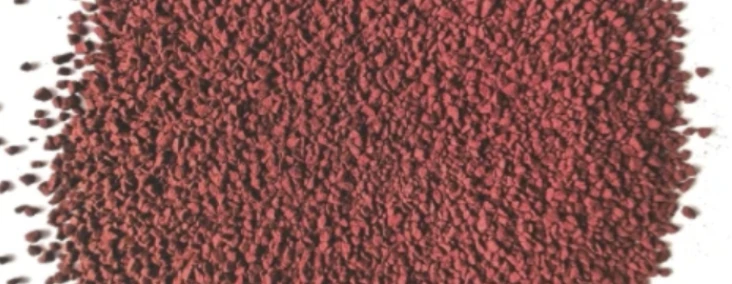
EDDHA-Fe ships as agricultural-grade powder in standard 25kg moisture-proof packaging, with OEM, private-label and custom-formula processing available. The company is actively expanding partnerships across the EU, Latin America, the Middle East and Asia.
Frequently Asked Questions
EDDHA-Fe remains structurally stable and active from pH 4.0 up to about pH 9.0, covering the calcareous and saline-alkali soils where EDTA-Fe (below pH 7.5) and DTPA-Fe (below pH 8.0) both lose effectiveness.
Under normal growing conditions, visible re-greening starts within 3–7 days of application, with overall plant vigor typically restored in about 10–15 days.
Yes, above roughly pH 7.5. EDTA-Fe becomes largely ineffective at that point, while EDDHA-Fe keeps working up to pH 9.0 with a chelation rate of 99% or higher, so far more of the applied iron actually reaches the plant.
Yes. It's fully water-soluble and compatible with NPK fertilizers, other EDTA-chelated micronutrients, and most neutral pesticides, with no precipitation or nutrient antagonism.
Iron-sensitive crops on alkaline soil: citrus, grapes and berries, stone fruit such as apple, peach and cherry, ornamentals like azalea and gardenia, plus vegetables, turf and hydroponic systems.
Standard 25kg moisture-proof packaging, with OEM, private-label and customized formula processing available for distributors and fertilizer manufacturers.
Sourcing EDDHA-Fe for your market or your own compound fertilizer line? Our technical team can confirm dosage, packaging and OEM options for your region.
Send an Inquiry